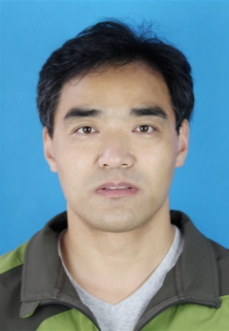
朱善良,博士,教授,硕士生导师,人工智能技术海洋场景化应用山东省工程研究中心副主任,青岛市人工智能海洋技术创新中心副主任,青岛科技大学数学与交叉研究院副院长。山东赛区数学建模竞赛专家组成员、山东省数学会理事、山东省应用统计学会理事、人工智能海洋学专业委员会委员。
研究领域
1. 非线性系统控制:智能控制、容错控制、神经网络控制
2. 人工智能海洋学:海洋遥感、现象预报、数据重构
3. 大数据技术及应用:大数据分析、大数据挖掘
4. 科学计算及应用:智能求解算法、PDE智能计算
科研成果
近年来,主持或参与国家自然科学基金、省自然基金、省教改项目等各类教学科研项目20多项,在国内外期刊发表学术论文80余篇,其中被SCI、EI检索70余篇,参编教材1部。指导学生参加全国大学生数学建模竞赛、中国研究生数学建模竞赛、美国大学生数学建模竞赛等各类竞赛获国家一等奖9项、国家二等奖29项、国家三等奖13项、山东省一等奖37项、山东省二等奖12项、山东省三等奖7项。指导本科生参加国家大学生创新计划项目4项。
奖励及荣誉
曾获山东省教学成果奖一等奖1项、二等奖1项、中国石油和化学工业联合会教育科学研究成果二等奖1项、青岛科技大学教学成果一等奖2项;获“全国大学生数学建模竞赛优秀指导老师”、“全国大学生数学建模竞赛山东赛区优秀辅导老师”、“全国大学生数学建模竞赛山东赛区优秀组织者”、“青岛科技大学十大杰出青年”、“青岛科技大学优秀教师”等荣誉称号。
代表性论文
[1] Wang, Dong-Mei, Han, Yu-Qun, Lu, Li-Ting, Zhu, Shan-Liang. Dynamic event-triggered adaptive tracking control for stochastic nonlinear systems with deferred time-varying constraints[J]. Chaos Solitons & Fractals, 2024, 182.
[2] Zhao, Wei, Han, Yu-Qun, Zhu, Shan-Liang. Adaptive asymptotic tracking control of constrained nonlinear MIMO systems subject to unknown hysteresis input: A novel network-based strategy[J]. European Journal of Control, 2024, 80.
[3] Zhao, Wei, Han, Yu-Qun, Zhou, Ya-Feng, Zhu, Shan-Liang. Adaptive finite-time tracking control of nonlinear systems subject to input hysteresis and multiple objective constraints[J]. International Journal of Robust and Nonlinear Control, 2024, 34(15): 10292-10314.
[4] Yu-Qun Han, NaLi, Dong-Mei Wang, Ya-Feng Zhou, Shan-Liang Zhu. Adaptive prescribed performance control for state constrained stochastic nonlinear systems with unknown control direction: a novel network-based approach[J]. Neural Computing and Applications, 2024, 36(6): 2737-2748.
[5] Li, Na, Han, Yu-Qun, He, Wen-Jing, Zhu, Shan-Liang. A novel network-based controller design for a class of stochastic nonlinear systems with multiple faults and full state constraints[J]. International Journal of Control, 2024, 97(4): 651-661.
[6] Lu, Li-Ting, Zhu, Shan-Liang, Wang, Dong-Mei, Han, Yu-Qun. Distributed adaptive fault-tolerant control with prescribed performance for nonlinear multiagent systems[J]. Communications in Nonlinear Science and Numerical Simulation, 2024, 138.
[7] He Wen-Jing, Zhu Shan-Liang, Lu Li-Ting, Han Yu-Qun. A novel network-based adaptive fault-tolerant control of switched nonlinear systems subject to multiple faults under prescribed performance[J]. ISA Transactions, 2024, 145: 78-86.
[8] Lu, Li-Ting, Zhu, Shan-Liang, Wang, Dong-Mei, Han, Yu-Qun. Predefined-time adaptive consensus control for nonlinear multi-agent systems with input quantizationand actuator faults[J]. Nonlinear Dynamics, 2024, 112(16): 14215-14234.
[9] He Wen-Jing, Zhu Shan-Liang, Lu Li-Ting, Zhao Wei, Han Yu-Qun. Adaptive multi-switching-based global tracking control for switched nonlinear systems with prescribed performance[J]. IEEE Transactions on Automation Science and Engineering, 2024, 21(3):3243-3252.
[10] Huang, Jing; Zhang, Linlin; Zhu, Shanliang; et al. The reliable sampling interval for monitoring interannual variability of the Kuroshio transport at 18°N. Journal of Sea Research. 2023, 193, 102374.
[11] Zhao, Yizhi, Qi, Jifeng, Zhu, Shanliang, et al. Estimation of the barrier layer thickness in the Indian Ocean based on hybrid neural network model[J]. Deep-Sea Research Part I-Oceanographic Research Papers,2023,202.
[12] Zhu, Shan-Liang; Han, Yu-Qun. Adaptive decentralized prescribed performance control for a class of large-scale nonlinear systems subject to nonsymmetric input saturations[J]. Neural Computing & Applications, 2022(13): 11123-11140.
[13] Gu, Chen; Qi, Jifeng; Zhao, Yizhi; Yin, Wenming; Zhu, Shanliang. Estimation of the mixed layer depth in the Indian ocean from surface parameters: a clustering-neural network method[J]. Sensors, 2022(15): 5600.
[14] Zhu, Shanliang; Zhao, Yu; Zhang, Yanjie; et al. Short-term traffic flow prediction with wavelet and Multi-dimensional Taylor network model[J]. IEEE Transactions on Intelligent Transportation Systems, 2021(5): 3203-3208.
[15] Gao, Tian; Zhu, Shanliang; Liu, Jing; et al. A new context-aware approach for automatic Chinese poetry generation[J]. Knowledge-Based Systems, 2021(232):107-409.